


Page 8 - Coffee Facts

- 24 September 2024
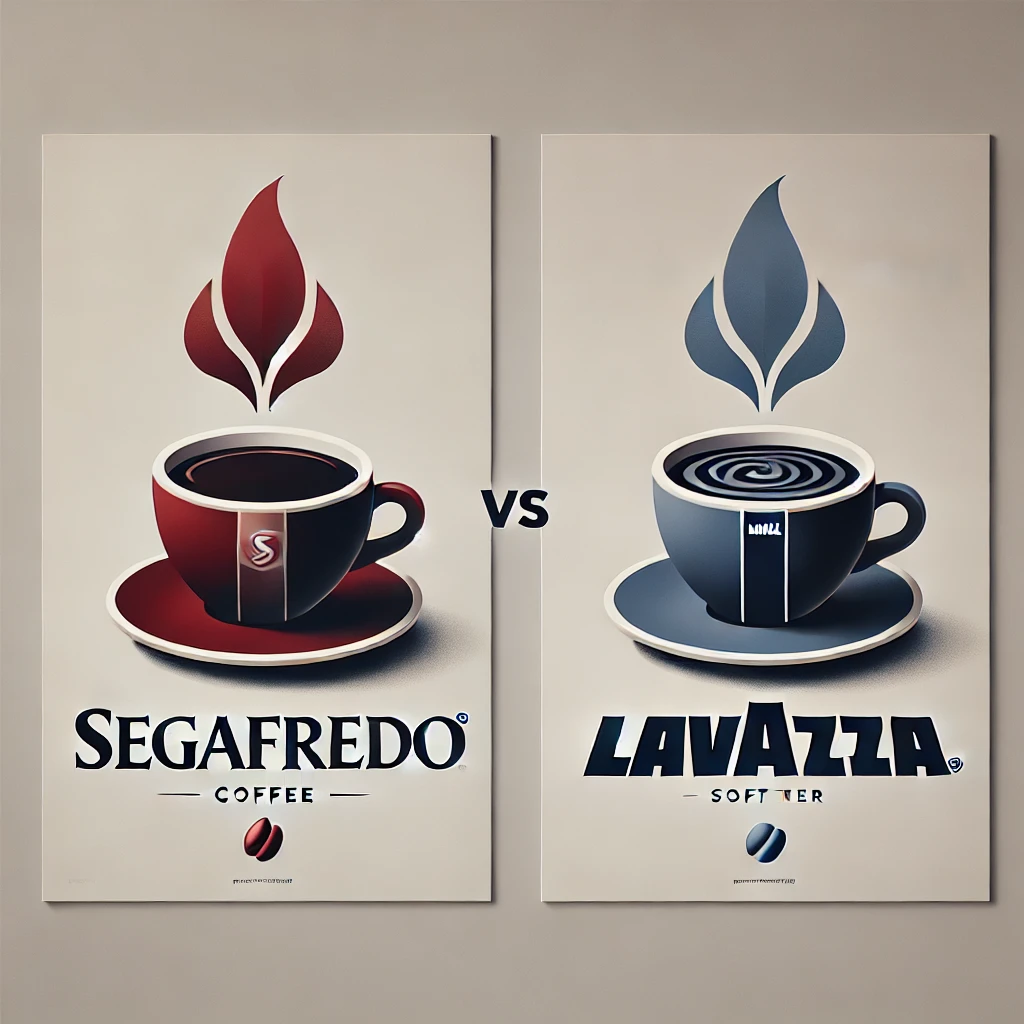
When it comes to coffee, two Italian brands have firmly established themselves as global favourites: Segafredo and Lavazza. Both brands are known for their high-quality products and rich histories in the coffee world, but they cater to different flavour profiles and audiences. Curious which of these two brands best suits your taste preferences? In this blog post, we compare the general characteristics of Segafredo and Lavazza so you can make a well-informed choice.
Segafredo: Traditional and powerful Italian espresso
- Philosophy and focus
Segafredo is a brand deeply rooted in classic Italian coffee culture, with a focus on the traditional espresso experience. This brand is aimed mainly at coffee drinkers who are looking for a powerful, full flavour. Segafredo is loved by those who want to experience the authentic, no-nonsense espresso the way it’s drunk in Italy.
- Flavour profile
Segafredo is known for its robust and intense flavours. The coffee from this brand often has a pronounced body
- 20 September 2024
If you’re a true espresso lover, you’ll know that the choice of coffee beans is crucial. Not all beans are created equal, and finding the perfect bean can take your coffee drinking to a higher level. For many, Illy coffee beans are the ultimate choice for a delicious espresso. But what makes Illy coffee beans so special? In this blog post, we explore the main reasons why this Italian coffee bean stands out in the world of espresso.
1. Outstanding quality through generations of craftsmanship
Illy is no newcomer to the coffee world. The family business, founded in 1933, has built up decades of experience in selecting, roasting and packaging the best coffee beans. This rich history has given them the expertise to continuously strive for perfection. This craftsmanship is passed down from generation to generation, resulting in consistent, high-quality coffee beans.
2. Blend of 100% Arabica beans
What makes Illy unique is their focus on using only the best 100% Arabica coffee beans. Arabica beans
- 31 March 2022
Brewing the tastiest coffee at home, who doesn’t want that? But how come there’s such a big difference between the coffee you make at home and the espresso or cappuccino from your favourite coffee bar? Although a lot of that has to do with the coffee machine and the skills of the barista, there are definitely things you can do at home to improve your coffee. Curious how? Read on with us.
These tips come from baristaworden.nl. A website for coffee lovers, by coffee lovers. There you’ll find plenty of tips and tricks to become a better home barista.
1. Buy freshly roasted coffee beans
It sounds logical, but plenty of people still don’t do it. Just like you buy fresh produce at the supermarket, coffee beans also taste best when they’re freshly roasted. But what exactly does that mean? Coffee beans are fresh for up to 6 - 8 weeks after roasting. That doesn’t mean you have to throw the beans straight away once 8 weeks have passed, but the flavour and aromas do start to slowly fade.
2. Grind
- 26 July 2017
Coffee comes from the Latin name of the plant genus Coffea. The genus belongs to the Rubiaceae family and contains over 6,000 different types of plants and trees, which mostly grow in tropical regions.
The genus Coffea contains at least 25 different species, some of which can grow more than 10 metres tall. For us, there are 2 important species within the Coffea genus: Coffea Arabica and Coffea Canephora.
Coffea Arabica vs. Coffea Canephora
- Coffea Arabica produces Arabica beans, which most quality coffee is made from. Arabica is the only coffee that can be drunk without the beans being mixed with other types of coffee beans (a mix is called a blend). Arabica coffee is generally fairly mild and comes from places such as Brazil.
- Coffea Canephora produces Robusta beans, which are often used in blends (mixed with Arabica beans). This coffee is considerably more bitter.
There are also the C. liberica and C. excelsa plants that produce liberica and excelsa beans. However, these are used much less
- 9 May 2017
The Dutch drink on average around two cups of coffee a day, which equates to roughly seven kilos of coffee beans a year. That puts them in the top three of coffee drinkers in the world, after Norway and Finland. The popularity of coffee comes hand in hand with conflicting advice and findings, for example from health coaches. So today we’re busting three stubborn myths about coffee.
1. Drinking coffee dehydrates you = nonsense.
Caffeine is a diuretic, you need to pee a little more often as a result, and so it has a dehydrating effect. At least, it would, if the main ingredient of coffee weren’t water.
The amount of water in coffee counts towards the daily recommended water intake people should be drinking. A study on caffeine intake shows that a normal amount of caffeine doesn’t cause dehydration. The bottom line is that the water in coffee is enough to make up for the extra water leaving your body. Three cups of coffee a day hydrates as much as three glasses of water a day, according to
- 9 May 2017
Italy and coffee: a combination you really can’t miss. In almost every country in the world where coffee is drunk, the flavours and habits are based on Italian coffee culture. Italians are the founders of this coffee culture; they start with it early in the morning and even after a late Italian meal, coffee is drunk. Time to take a closer look at Italian coffee culture. You’ll find everything about the customs and traditions here so you won’t look out of place when you order a coffee on your trip to Italy. Once you’re back from your well-earned holiday, you’ll naturally want to recreate those Italian vibes, which is why we’ve got the best Italian coffee beans for you.
The day begins with... cappuccino
The beginning of the day is the ideal moment to enjoy a delicious cappuccino. Preferably alongside a sweet croissant, which is sometimes filled with jam. But take note: after around 11 or 12 in the morning, it’s best not to order a cappuccino anymore — according to the Italians, it’s more
- 4 May 2017
I didn’t really like coffee much when I was younger either. That changed when I was about 14 and started working in the washing-up kitchen of a restaurant. I’d said I didn’t need any coffee, but unasked, by the end of the day there were always five full, cold cups of coffee sitting next to me on the worktop. A waste, of course, so at some point I gave it a go anyway. And, well, after that I kept going..
Most children will pull a face when they take a sip of coffee, as if they’ve bitten into a lemon. Yet a few years down the line, a lot of those same youngsters are happily drinking coffee, so how does that actually happen?
Children have more taste buds than adults, and those taste buds are also spread more widely across the mouth. So different flavours come across differently for children than they do for adults. Coffee without milk and sugar has quite a strong flavour on its own, which is why even many adults only drink it with, say, a splash of milk. On top of that, you naturally get used
- 5 March 2017
We’ve already told you that coffee is good for you. Coffee has plenty of mental and physical benefits. The University of Georgia has now added even more evidence to back that up. Research shows that a cup of coffee has a positive effect on your sporting performance. Simon Higgins studied 600 scientific articles on the effects of coffee. He focused on the links between caffeine consumption and athletes’ endurance. In nine follow-up experiments, in which participants had to cycle or run, he looked at the endurance levels of the test subjects. Higgins found that 3 to 7 milligrams of caffeine per kilo of body weight increased the participants’ endurance by no less than 24%. A cup of coffee contains roughly 75 to 150 milligrams of caffeine. According to Higgins, more research should be carried out into coffee as a source of caffeine. He says the effects of caffeine from coffee can be just as high as the effects of pure caffeine, while the general assumption is that they’re lower. Via DeMorgen
- 28 February 2017
After water, coffee is the most-consumed drink in the world. Caffeine increases your alertness and reduces tiredness. But what actually happens to your body when you drink a cup of coffee? An Australian coffee company, Map Coffee, made an infographic about it, and we’ve summed up the findings for you here.
This is what happens to you when you drink coffee
After you’ve switched on the coffee machine in the morning and that lovely coffee smell has drifted through your home, it’s time to enjoy your freshly brewed cup of coffee. After a few sips, things start to change in your physical and mental state. The effects in order:
After 10 minutes - caffeine enters your bloodstream
As soon as the caffeine enters your bloodstream, your heart rate and blood pressure go up slightly. Did you know caffeine can also make the effects of alcohol feel less noticeable between 10 and 90 minutes after drinking a cup of coffee?
After 20 minutes - your alertness rises
You start to feel more alert and your concentration
- 22 February 2017
Sometimes you fancy something different from your standard cup of coffee. Something to treat yourself or your guests with. So today we’re going to explain how to make a caffè latte. Without paying £3 or more at a fancy coffee bar, just using the bits and bobs you probably already have at home.
What is a caffè latte?
A caffè latte is a coffee drink made from espresso and warm milk; in some countries a caffè latte is also called a café au lait. For simplicity’s sake, let’s call the caffè latte a milky coffee Italian-style. Really, it’s a mild cappuccino without foam, with a slightly lighter colour and a soft, creamy flavour. If you want to make it really exciting, you can add a flavour with a coffee syrup, such as hazelnut.
What do you need to make one at home?
Let’s assume you don’t already have a pricey espresso machine sitting on your counter that you can use to make a caffè latte. So we’ll explain how to make a caffè latte using a normal coffee machine. The sort where you simply put a


Recent Posts


