A coffee freakshake is anything but an ordinary coffee drink. Think of a creamy mix of coffee, ice cream and milk, topped with whipped cream, biscuits, chocolate and other sweet temptations. It’s not only delicious, it’s a real spectacle in a glass. Perfect for when you really want to treat yourself.
What is a coffee freakshake?
A coffee freakshake is a luxurious milkshake with a hefty dose of creativity and caffeine. It originally started as a sweet trend from Australia, where milkshakes were transformed into true works of art full of toppings. Add a shot of espresso and you have the ultimate combination of creamy, sweet and powerful.
What makes this shake so special are the over-the-top toppings: think whipped cream, biscuits, donuts, caramel, chocolate and even marshmallows. Anything goes, as long as it’s festive.
Single origin espresso comes from one country, region or even a single plantation, giving it its own distinctive character. While blends focus on balance, single origin is all about purity and expression. Every coffee bean tells a story about its origin, from the soil to the climate. That makes each espresso different, surprising and personal. If you love coffee with a clear story, single origin espresso offers a flavour journey well worth taking.
What exactly does single origin coffee mean?
Single origin coffee comes from one origin — a country, region, cooperative or even one specific plantation. The idea is that the coffee comes entirely from the same source, without mixing with other harvests or varieties. This way, you taste the unique characteristics of that area, also called the terroir.
The climate, altitude and soil type together determine the coffee's character. Beans from Ethiopia often taste fruity and floral, while Brazilian single origins tend to be soft and nutty.
Fancy something special with your coffee, but don’t want to fuss? Dalgona coffee looks like you’ve hired a barista, but really all you need is a whisk, some instant coffee and a bit of patience. The foam often doesn’t work or collapses too quickly, which can be frustrating. With this recipe, it will work: you’ll learn exactly how to get the creamy coffee topping firm and fluffy, so you can serve a perfect Dalgona coffee yourself.
What is Dalgona coffee?
Dalgona coffee is a creamy, whipped coffee drink made from three simple ingredients: instant coffee, sugar and hot water. Whipping these together creates a firm foam that you serve on top of cold milk. The drink originally comes from South Korea and became popular worldwide via social media. The result is a delicious combination of smooth milk with an intense coffee layer that also looks impressive in your glass.
A powerful espresso starts with the right espresso beans. But with so many types on the market, choosing isn't always easy. This overview lists the best espresso beans of 2025 for you. Looking for a sharp kick in the morning or a full crema layer after dinner? You're in the right place. Get your piston machine or super-automatic ready, it's time for an espresso with character.
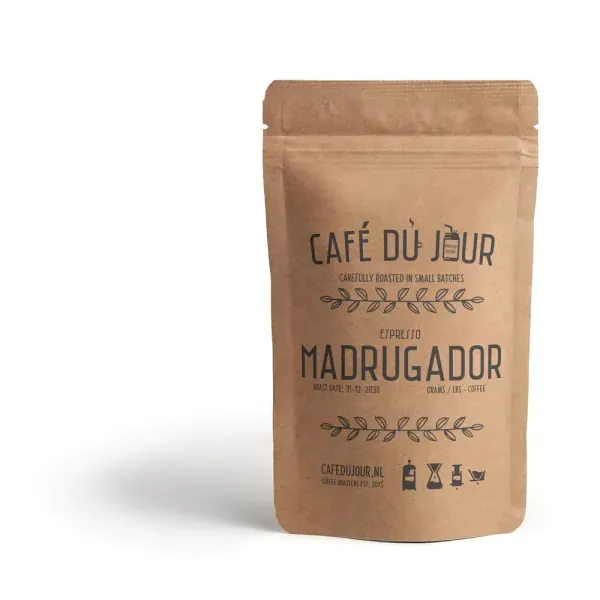
Always up early, or struggling to get going? Espresso Madrugador is your secret weapon. These medium roasted espresso beans give you exactly the strong kick you sometimes need. Expect a pronounced spicy flavour, subtle fruity notes and above all: character.
Dialling in an espresso machine properly means setting all the controls so the water extracts just the right amount of flavour from the coffee. You do this by balancing the grind size, coffee dose, pressure and extraction time. When these factors are in harmony, you get an espresso with a rich flavour, a creamy crema layer and the perfect balance between acidity and bitterness. Think of it as fine-tuning your machine so every bean shows exactly what it's got inside.
Why is dialing in your espresso machine so important?
A well-dialled espresso machine delivers an espresso with the right flavour balance. When your machine isn't set correctly, you'll notice immediately: overly bitter coffee often comes from too fine a grind or too high pressure, while a sour taste usually results from too coarse a grind or too low a temperature. By dialing in your machine properly, you not only get the best out of your
espresso beans,
but also from your own barista skills. This way, every espresso tastes
Fresh coffee beans taste fuller and richer than coffee pods, but pods are quicker and easier. If you love a real espresso, you'll notice the difference straight away. Still, many people choose pods for the convenience and consistent quality. Here you'll read how both options score on flavour, ease of use, price and sustainability, so you know which coffee suits your daily ritual best.
What's the difference between coffee pods and fresh coffee beans?
The difference between coffee pods and fresh coffee beans lies in freshness and the way the coffee is prepared. Coffee pods contain ground coffee that's sealed in an airtight capsule immediately after roasting. That's convenient, but the flavour is less lively than freshly ground beans. Fresh coffee beans are only ground just before brewing, preserving aromas and oils better.
There's also a difference in experience. With coffee pods, you just press a button and your espresso is ready within seconds. With fresh beans, you control the grind size,
The most common mistakes when making espresso (and how to avoid them)
Most espressos don't fail because of bad beans, but due to small mistakes during brewing. A grind that's too coarse, too little coffee or a cold brew group can completely change the flavour. Luckily, these mistakes are easy to spot and prevent. With the right attention and technique, you'll pull an espresso every time with a full body, a beautiful crema layer and exactly the flavour you're after.
Using the wrong grind size
The wrong grind size is the most common mistake when making espresso. The grind size determines how fast water flows through the coffee and thus greatly affects the flavour.
If the grind is too coarse, the espresso flows too quickly and tastes sour and watery. If the grind is too fine, it flows too slowly and the flavour becomes bitter and heavy. The ideal espresso has a brew time of about 25 to 30 seconds and a nice, even crema.
Adjust the grind size in small steps, change one setting at a time and
The difference between espresso and filter coffee mainly lies in the brewing method. Espresso is made under high pressure, while filter coffee slowly drips through by gravity. This makes espresso taste strong and concentrated, whereas filter coffee is soft and clear. Both brewing methods bring out different flavours, but which one suits you best?
How are espresso and filter coffee brewed?
The biggest difference between espresso and filter coffee is how the water passes through the coffee. Espresso is brewed under high pressure, while filter coffee slowly drips through by gravity.
For an espresso, hot water is forced through finely ground coffee at about 9 bar pressure. This happens in just 25 to 30 seconds. That short extraction time creates an intense, concentrated flavour with a full body and a lovely creamy layer.
With filter coffee, water slowly passes through a filter with coarser ground coffee. The brewing time is between 2 and 4 minutes, allowing the flavours to develop gradually.
In short: An espresso macchiato is an Italian espresso with a small spot of milk foam (±30 ml in total). A cortado is Spanish and contains almost equal parts espresso and warm milk without foam (±60 ml in total), which makes it smoother and creamier.
An espresso macchiato and a cortado look similar at first glance: small coffee drinks with espresso and milk. Yet the difference lies in the ratio, flavour and even the origin. While the macchiato comes from Italy and contains just a spot of milk, the cortado is Spanish and much smoother due to the almost equal amount of milk and espresso.
What is an espresso macchiato?
An espresso macchiato is an espresso with a small 'spot' of milk or milk foam.
The word macchiato literally means "spotted" in Italian. So the espresso is "spotted" with a dollop of milk foam or a small splash of warm milk. This hardly changes the flavour but softens the sharp edge of the espresso just a little.
In Italy, the macchiato is mainly enjoyed by people who love the
A ristretto (±15 ml), espresso (±30 ml) and lungo (±60 ml) mainly differ in volume and extraction time, although they are made with the same amount of coffee. These differences in water amount and time create unique flavour profiles: a ristretto is stronger and sweeter, an espresso balanced, and a lungo milder. Here you'll find exactly what the difference is, how the preparation varies, and which variant best suits your taste.
What is a ristretto, espresso and lungo?
A ristretto, espresso and lungo are made with the same coffee, but differ in extraction time and water amount.
Ristretto: the shortest shot of the three. Made with the same amount of coffee as espresso, but half the water (±15 ml), it tastes stronger and sweeter.
Espresso: the classic of about 25–30 ml. The balance between sweet, sour and bitter makes this the reference point for all other coffee drinks.
Lungo: the 'long' variant. More water passes through the same amount of coffee (±60 ml), making the flavour milder but also